How to Use a Lemon Vibrator When You Want Solo Pleasure With a Partner Present
Let's be real. The fantasy is that your partner will always be available, present, and in the mood exactly when you are. The reality is that desire doesn't sync like that. Sometimes you want pleasure and your partner is reading, working, tired, or just not in the headspace for sex. So you have a choice: suppress the impulse or claim your right to solo pleasure even when they're home.
Most people choose suppression because they've never learned how to do the other thing without it feeling like a transgression. But solo pleasure with a partner present isn't infidelity, rejection, or a failure of your relationship. It's self-knowledge. It's honoring your body's actual needs instead of waiting for a mythical moment of perfect alignment.
The trick is knowing how to navigate it without the guilt that makes it awkward.
The permission problem is the actual problem
I work with couples regularly where one partner has stopped touching themselves because they feel they "should" only want sex when their partner initiates or participates. That's learned shame, not real desire. And it costs more than pleasure. It costs you access to your own arousal, your body's feedback system, and frankly, your self-respect.
Here's what I tell them: your partner's presence in your home doesn't revoke your right to your own body. Full stop. If that lands weirdly, sit with it for a minute. Because most of the awkwardness around solo pleasure with a partner home actually comes from the belief that wanting it is somehow a rejection of them. It usually isn't.
Solo pleasure serves different purposes than partnered sex. Sometimes you want the speed. Sometimes you want total control over pressure and rhythm. Sometimes you want to explore sensation without performing or managing someone else's response. Sometimes you just want 20 minutes of brain-off time. None of that means your partner isn't enough. It means you're enough for yourself.
The conversation you actually need to have
Before you use a lemon vibrator for solo pleasure while your partner is home, you need one conversation. Not permission (you don't need that), but clarity. The conversation isn't "Is it okay if I masturbate?" That frames it as needing approval. Instead, it's "I want to prioritize my own pleasure and sometimes that means solo time. Here's how I'm thinking about that."
Then actually listen. Your partner might be relieved. They might be curious. They might feel awkward initially, which is fine. Awkwardness isn't a reason to hide. It's feedback that the boundary is new and needs normalizing.
The conversation also prevents accidental interruption, which kills the experience and creates unnecessary weirdness. A simple "I'm going to have some solo time for the next 30 minutes" means they know not to knock on the door, and you're not anxious about being walked in on.
If your partner responds with shame, jealousy, or attempts to make you feel guilty, that's a different problem. It's a relationship problem, not a pleasure problem. And it might warrant a deeper conversation or even couples therapy. But that's separate from whether you deserve solo pleasure. You do.
Where and how to set the scene
If you have a bedroom with a door that locks, use it. Privacy is the first building block of comfort. If you don't, be creative. A bathroom with good ventilation and a locking door works fine. The point is that you're not constantly monitoring for interruption.
Sound matters more than most people realize. Some people put on low music or a podcast they half-listen to. Others prefer silence. There's no rule. But if you're anxious about being heard, that tension lives in your body and blocks arousal. So either create sound cover or make sure you're far enough away that it doesn't matter.
Lighting is personal. Some people want the room dark. Some want to see what they're doing. Warm light often feels less clinical than bright overhead light, but you know your body.
Timing is the invisible variable most people ignore. If your partner typically watches TV in the living room at 9 p.m. and you have a solid routine, that's golden information. You know when you have uninterrupted time. If the routine is chaotic, you might need to be more intentional. "I'm going to take solo time Thursday evening" gives you both certainty.
How to actually use the lemon vibrator alone
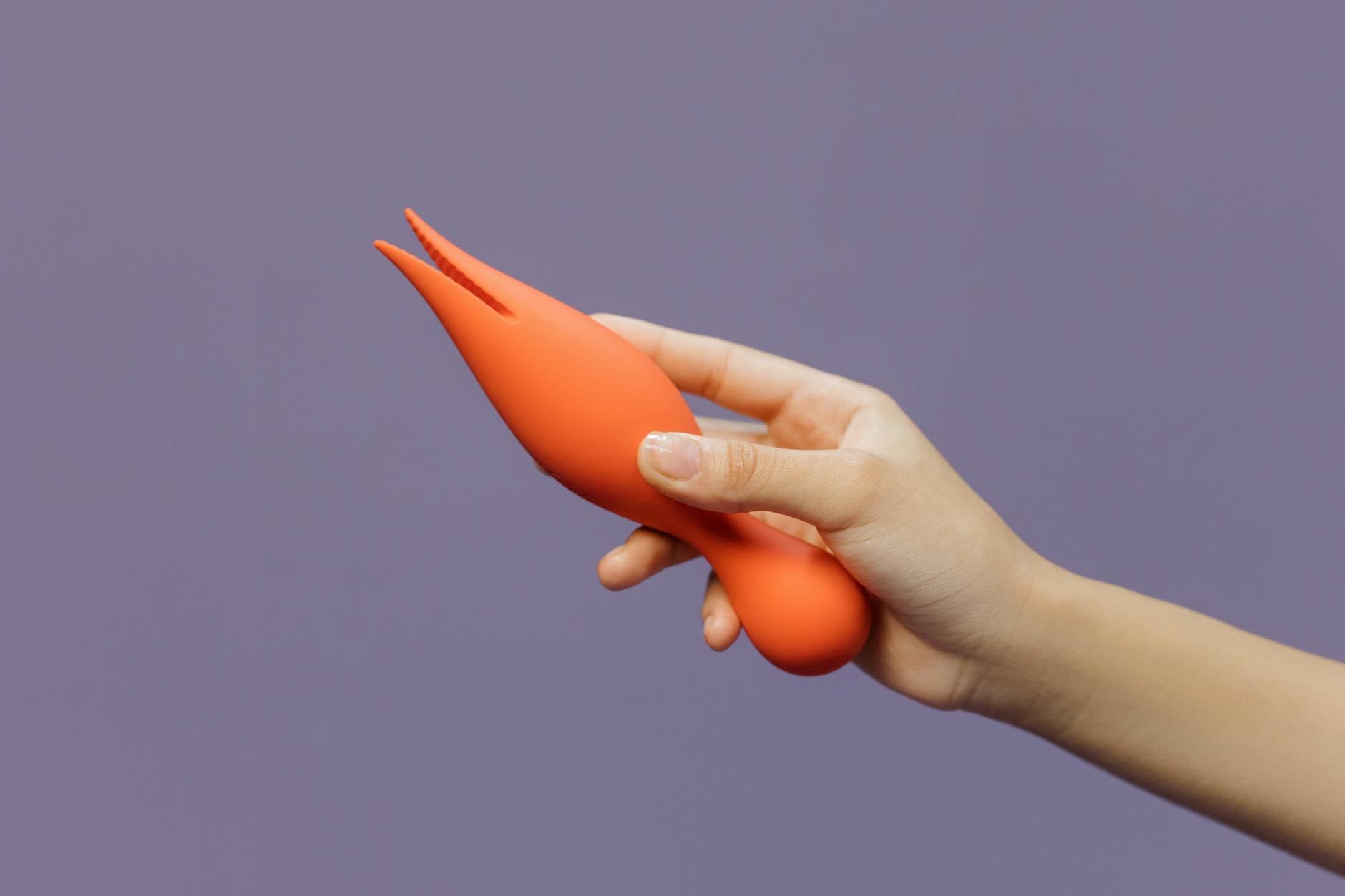
If you're not used to solo pleasure, the lemon clitoral vibrator is a smart entry point because it's designed to work with your body's actual anatomy, not against it. Air-suction technology means the stimulation is broader and less likely to create numbness compared to traditional vibration.
Start by exploring without the vibrator. Spend 10-15 minutes with your hands. Notice what rhythm feels good, what pressure, what kind of touch. This is the research phase. Many people skip it because they're goal-oriented, but skipping it means you'll default to someone else's rhythm instead of finding yours.
Once you're warmed up, introduce the lemon vibrator on a low setting. The sensation should feel like support, not shock. If it's too intense, back off the intensity and focus on positioning. You don't need to move it fast. Slower, steady contact often produces better results than frantic motion.
One thing that surprises people: orgasm alone is often different from orgasm with a partner. It might be faster, slower, more intense, less intense, or entirely different in shape. That's not wrong. That's information. Notice it without judgment.
The after is part of the experience too
Here's what people don't talk about: what happens after solo pleasure when your partner is home. The awkwardness often comes not from the act itself, but from how you rejoin the shared space.
The honest answer is you just rejoin the shared space. You're not glowing or guilty. You're not dramatically changed. You're the same person who was there 30 minutes ago, just with your nervous system reset. If you act like something huge happened, your partner will absorb that energy and feel weird too.
Some partners love that their significant other took solo pleasure time and feels more relaxed. Some initially feel awkward and gradually adjust. Both are normal. The key is you've already communicated so there's no guessing or shame spiraling.
If your partner asks about it, you can be straightforward or you can be private, depending on your dynamic. "I had some good solo time" is a complete answer. You don't owe a detailed report.
How this actually strengthens your relationship
This probably seems counterintuitive, but couples who normalize solo pleasure often have better sex together. Because you know your own body. Because you're not resentful that your partner doesn't read your mind. Because you're not so starved for touch that you're anxious when partnered sex happens.
Your partner also doesn't have to carry the weight of being your only source of pleasure. That's a heavy load. If you're responsible for your own pleasure and they're responsible for theirs, partnered sex becomes something you choose together, not something you desperately need from them.
I've also noticed that couples who normalize this report less resentment around mismatched desire. Because the partner with lower desire doesn't feel guilty, and the partner with higher desire doesn't feel rejected. You're both getting what you need.
The lemon vibrator isn't the point. The point is that you're claiming agency over your own body, your own pleasure, and your own time. That's what actually transforms things.
What if your partner wants to join?
Sometimes you want solo time. Sometimes your partner notices you're having pleasure time and asks if they can join. That's a beautiful thing, actually. And it's totally up to you.
You can say yes. You can say you're having solo time this round but you're open next time. You can say "Come sit in the room with me, but I'm doing my thing." All of those are valid. The key is that you get to choose, because you've established that your solo pleasure time is real and protected.
FAQ
Is it normal to want solo pleasure when your partner is home?
Completely normal. Desire, interest, and arousal don't follow your partner's schedule. Solo pleasure serves different purposes than partnered sex. It's self-knowledge, nervous system regulation, and claiming your own body. If anything, not wanting solo pleasure sometimes is less common than wanting it.
Will my partner feel rejected if I use a lemon vibrator alone?
Only if you frame it as rejection. If you communicate clearly ("I want solo time on Tuesday evening") and you're not using it as a substitute for all partnered intimacy, most partners actually feel relieved. They don't have to be available 24/7. But if your partner consistently feels hurt, that's worth exploring in conversation or therapy, because it points to deeper insecurity or a mismatch in how you view pleasure.
How do I talk to my partner about this without it being weird?
Treat it like any other boundary or preference. You wouldn't say "Is it okay if I shower?" You'd just shower. Solo pleasure can be similar. A simple "I want to prioritize my own pleasure, and sometimes that means solo time. I'll let you know when I'm having that time so you know not to interrupt" is clear and direct. If they respond with shame or anger, that's about them, not you.
Should I do this in a bedroom or somewhere else?
Anywhere with a lock and some privacy. If you share a bedroom, a locked door is usually sufficient. If you don't have privacy, a locked bathroom works. The privacy is for comfort, not because you're doing something wrong.
Can I use the lemon vibrator for solo pleasure every day?
Yes, if you want to. There's no rule about how often you can touch your own body. Some people have solo pleasure daily. Some weekly. Some a few times a month. It's your body. Listen to what feels good and sustainable, and don't let anyone else's timeline become your rule.
What if my partner walks in on me?
If you've communicated clearly about your solo time, the risk is lower. But if it happens, you don't need to scramble or apologize. "I'm having some solo time, I'll catch you in a bit" is all you need. If your partner is mature, they'll back out and close the door. If they make a big deal out of it, that's something to discuss later.
The bottom line
Your body doesn't belong to your relationship. It belongs to you. Solo pleasure, whether you use a lemon clitoral vibrator or your hands, is a form of self-care and self-knowledge. It's not a rejection of your partner. It's not infidelity. It's you, alone with yourself, honoring what your body actually wants.
The lemon vibrator makes that experience better because it's designed to work with your body, not demand a specific response. But the real work is the permission you give yourself and the conversation you have with your partner. Once those two things are in place, the pleasure becomes straightforward.
If you're struggling with guilt or shame around solo pleasure, or if your partner's response is causing friction, that's worth exploring further. Sometimes it helps to talk to a therapist who specializes in sexuality and relationships. But the baseline truth is simple: you deserve to know your own body, and solo time is how you get there.