
Here's the thing about intensity mismatches
Most couples don't talk about it. One person finds the vibrator overwhelming; the other wishes it went harder. You end up either turning the whole thing into a negotiation or defaulting to whoever's less comfortable. Neither works.
What actually works is treating intensity like a dial you both control, not a password someone has to crack. A lemon vibrator's multi-setting design makes this possible.
Why intensity preference matters (and isn't about compatibility)
Intensity preference is not about how much someone enjoys sex. It's about nerve sensitivity, arousal speed, tissue thickness, and how your nervous system processes stimulation. Someone might want gentler suction because they're easily overstimulated (common after arousal builds). Someone else might need deeper pressure because their nerve endings sit further beneath the surface.
Neither is wrong. Both are normal.
The awkward part: when couples don't know this, they interpret intensity mismatch as rejection. "If you liked me, you'd want what I want." Not true. But the silence around it makes it feel true.
Using a lemon clitoral vibrator with variable settings shifts the entire dynamic. Suddenly you're not negotiating pleasure. You're customizing it.
Start with a setting conversation, not in the moment
I recommend doing this before you're in bed. Fully clothed, daytime, when there's zero pressure.
One of you holds the lemon vibrator (yes, the actual toy), and you both feel each pattern setting through your fingers. That's it. Feel patterns 1, 2, 3, 4, 5, whatever your model offers. No performance, no goal.
Then each person names their default preference. "I naturally go for pattern 3." "I usually start at 2 and work up." "Anything above 3 feels sharp to me."
Write it down if it helps. This sounds silly until you're in the moment and neither of you remembers what was decided.
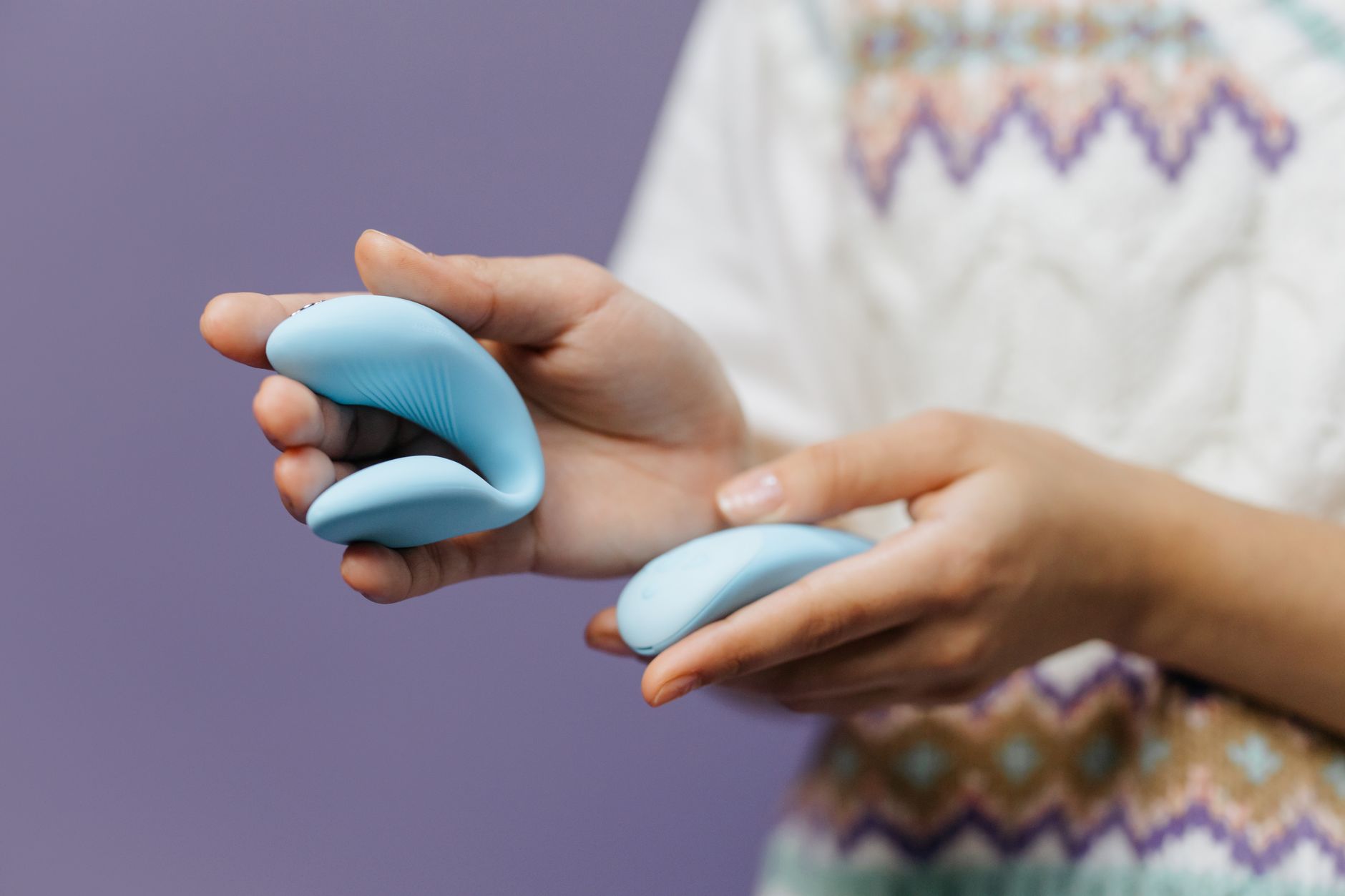
Photo by cottonbro studio on Pexels
The practical method for syncing in real time
When you're together, whoever's using the lemon vibrator starts low. Pattern 1 or 2, always. This isn't compromise. It's baseline.
Then talk out loud. "Does this feel good?" "Want me to turn it up?" "Stay here for a bit longer." The person receiving the stimulation gets to say yes, no, or "a little higher."
This is the opposite of silence. You're literally narrating intensity in real time, which sounds clinical but feels natural after about ninety seconds.
If your partner usually wants gentler stimulation and you crave intensity, here's a rhythm that works:
- Start together at their preferred setting (usually patterns 1-2 for a lemon sucker)
- Spend 5-10 minutes at that level
- Ask permission to shift up: "Want me to try pattern 3?" They say yes, no, or "in a minute"
- If yes, move up and keep checking in
- You might end at a different setting than they would have alone, and that's fine. The point is consent and communication, not hitting your personal max.
What to do when one person gets overwhelmed
If your partner suddenly asks you to turn the lemon vibrator down mid-session, don't interpret it as rejection of you. Interpret it as their nervous system recalibrating.
When stimulation builds for too long, the body sometimes needs a break. Not a full stop, just a reset. Drop it back to pattern 1 or 2 for 30 seconds, then ask if they want to go back up.
This is especially true for people who take longer to arouse. Once arousal peaks, every sensation feels sharper. A setting that felt great at minute 3 might feel too intense at minute 12.
Naming this out loud removes shame. "I need to dial it back for a sec" becomes routine, not a problem.
When one partner wants to explore higher intensities
Maybe your partner is curious about trying a higher setting but nervous. The move: ask them to tell you before you increase it, not during.
So you're at pattern 3, they're comfortable, and they say "Try 4 next time you ask." You ask "Ready?" They confirm. You shift up. Then you spend a few minutes there before checking in again.
This gives their body and mind time to adjust without panic. It's boring, methodical, and it works wildly well.
Some people need to feel intensity gradually. Some need to anticipate it. Some need both. A lemon vibrator's incremental settings handle all of this.
The communication script that actually works
Honestly? These three questions cover 90% of what you need:
"Does this feel good right now?" Listen for the answer.
"Want me to stay here or change it?" Give them control over the next beat.
"What would feel better?" Specific guidance, not guessing.
That's it. No flowery language, no performance. Just clarity.
Intensity differences across different arousal states
Here's something couples rarely discuss: the same person wants different intensities depending on their cycle, stress, how long foreplay's been going, whether they've orgasmed before. It's not inconsistency. It's normal variation.
If you've set a preferred intensity before, check in at the start of every session. "Still feeling like 2 today, or different?" Things shift.
This is especially true for people with vulvas, where sensitivity can change significantly across the menstrual cycle. But honestly, everyone's sensitivity fluctuates based on sleep, stress, and hydration. Asking each time removes the guesswork.
Why variable intensity settings beat single-speed alternatives
A lemon vibrator's multiple patterns mean you're not choosing between all or nothing. You're choosing from a spectrum. This is why they work so well for mismatched couples.
Someone who finds intense stimulation painful can stay at pattern 1 indefinitely. Someone craving more pressure can explore patterns 4 and 5. And the person in the middle? They've got options.
The other benefit: if one of you is recovering from pelvic floor tension or rebuilding sensitivity after numbness, variable settings let you start tiny and work up at your own pace. No pressure to jump to high intensity right away.
What happens when you stop making intensity a secret
I've watched couples move from awkward silence about this to actual ease. Once you name intensity preferences openly, they stop feeling like a flaw.
It becomes logistical instead of emotional. "Your body needs gentler suction" is information, not rejection. "I want to try a higher pattern" is exploration, not criticism of what you've been doing.
That shift matters for long-term intimacy. You stop defending your preferences and start collaborating on them.
When to call in more support
If one partner experiences pain at any intensity level, stop and check in with a healthcare provider. Pain during sex is treatable but it's not something you solve with communication alone.
Similarly, if intensity preference is connected to deeper mismatch in desire, emotional connection, or power dynamics in the relationship, a therapist can help you untangle it. Intensity conversations are one piece of the puzzle.
But for straightforward mismatches about how much stimulation feels good? A lemon vibrator with variable settings and a simple three-question script changes everything.
FAQs
What if my partner is embarrassed about needing lower intensity?
Remind them that intensity preference isn't a judgment on them or on what you're doing together. Gentler suction isn't "less hot." It's just what their body responds to best. Some of the most satisfying experiences happen at lower intensities, honestly. Frame it as customization, not compromise.
Can we use a lemon vibrator on someone without asking every single time?
Not without risk. Even in long-term partnerships, sensitivity shifts daily based on stress, hydration, cycle, sleep, and mood. Checking in takes 10 seconds and prevents overstimulation or pain. It's not a vibe killer. It's the opposite.
What if one of us wants intensity changes mid-orgasm?
That's totally normal and totally fine. Orgasm isn't one-note. Sometimes people want to dial back the intensity as they climax, or ramp it up right at the peak, or stay completely still. Keep your hand on the intensity control and stay responsive. This is exactly why variable settings exist.
Is there a way to compromise on intensity if we're really far apart?
Yes. One option is spending time at each other's preferred settings separately, then meeting in the middle for partnered sessions. Another is alternating sessions where one person gets their preference and the other gets theirs on different nights. A third is exploring whether the person wanting more intensity would be satisfied by longer foreplay instead of higher intensity.
How do we know if intensity mismatch is a sign of bigger relationship problems?
If the conflict is just about the vibrator's settings, you're probably fine. If intensity conversations trigger broader fights about who gets what they want, who cares more about whose pleasure, or control in the relationship, that's worth exploring with a couples therapist. The vibrator isn't the issue. It's revealing something underneath.
Can intensity preference change over time?
Absolutely. Your body changes. Stress levels change. Medication changes. Health challenges arise. Someone who needed gentler suction five years ago might crave more intensity now, or vice versa. This is why you check in regularly instead of assuming last year's preference still holds.