Let's start with the thing nobody says out loud
Anxiety doesn't just live in your head. It lives in your body, and it absolutely sabotages arousal. When you're running through your to-do list, replaying a conversation from this morning, or holding tension in your chest because of something completely unrelated to sex, your nervous system isn't available for pleasure. That's not a flaw. That's how biology works.
The problem is that most people treat this like a willpower issue. Like if you just relax harder or try more, arousal will show up. It won't. And honestly, that pressure to force yourself to feel something just makes the anxiety worse.
Here's what I've seen work repeatedly in my practice: when you use a tool like a lemon vibrator, you're not fighting your anxiety. You're working around it.
How anxiety actually blocks arousal
Your nervous system has two main settings. One is the sympathetic nervous system (fight-or-flight). The other is the parasympathetic nervous system (rest-and-digest, which is what you need for pleasure). When anxiety is running the show, you're stuck in sympathetic mode. Your body is literally not registering that it's safe to relax and feel sensation.
That's why standard vibrators sometimes feel ineffective for anxious people. A traditional vibrator requires you to already be aroused enough to enjoy it. If arousal isn't there yet, the sensation can feel meh or even overstimulating. It can actually spike your anxiety more.
Air-suction technology works differently. Instead of relying on friction vibration, it uses gentle suction and pulsing patterns that stimulate your clitoral nerves in a way that feels almost separate from the rest of your body. It's less about "getting you in the mood" and more about giving your nervous system a clear, repetitive sensory signal that bypasses some of the anxiety chatter.
This isn't mystical. It's sensory gating: your brain can only process so much information at once. A focused, rhythmic sensation gives your anxious thoughts less room to operate.
Why this matters when your mind won't quiet down
Think of it this way. If you're lying there trying to get aroused while your brain is spinning, you're essentially trying to do two things at once: fight the anxiety and create pleasure. The lemon vibrator lets you do just one thing: receive the sensation. Your job is to notice it, not to judge it or make something happen.
That shift from performance to sensation is the whole game when anxiety is in the picture.
I recommend starting with your lemon vibrator in a low-stimulation environment. That means your phone on silent, a locked door, and ideally a time of day when your anxiety is naturally lower. For most people, that's evening, not morning. Morning cortisol is higher anyway, and that's working against you.
Begin at pattern 1 or 2 on the Lem vibrator. Not because you need to "warm up," but because your nervous system needs permission to settle. Spend 5-10 minutes just feeling the sensation without any goal attached to it. No orgasm targets, no timelines. Just: this feels this way right now. That's the whole practice.
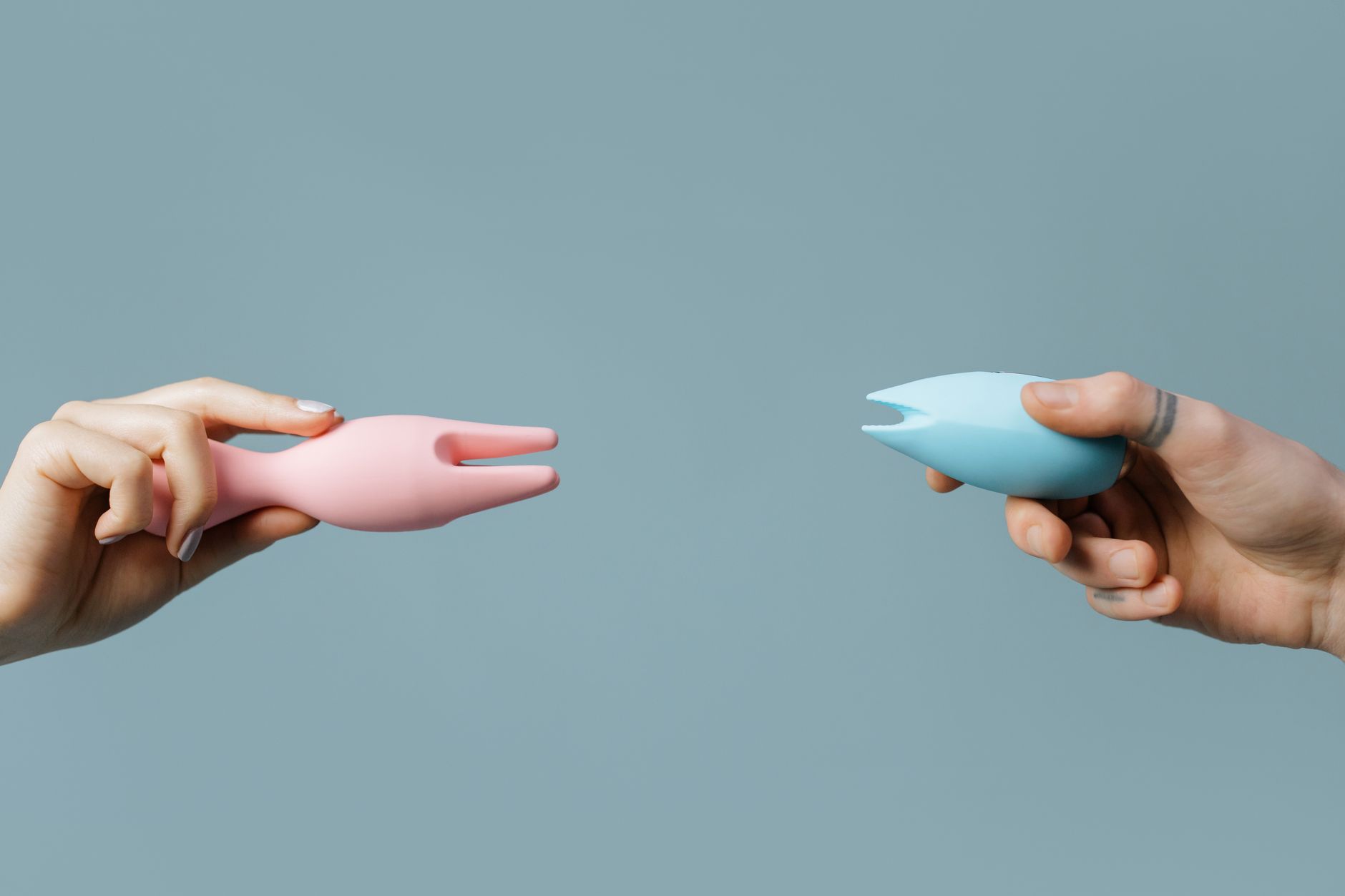
Photo by cottonbro studio on Pexels
The role of routine and predictability
Anxiety hates unpredictability. Your nervous system craves patterns because patterns feel safe. This is why routine is so powerful for anxiety-prone people, and it applies to pleasure too.
Instead of waiting until you "feel like it," set a specific time. Three times a week, same time, same place. Tuesday and Thursday evenings at 8 p.m., or Saturday morning at 9 a.m. Your brain will start to expect it, and expectation itself begins to settle anxiety.
When you arrive at that time, your lemon clitoral vibrator is already there, cleaned and ready. You sit down, you use it for 15-20 minutes, and you're done. No pressure for results. Consistency is doing the therapeutic work, not any single session.
Over time, this predictability retrains your nervous system to recognize these moments as safe. You're literally teaching your body that this time and place are for you, and nothing bad happens. That's the most direct anxiety antidote there is.
Managing the thoughts that still show up
Even with all of this, anxious thoughts will still arrive while you're using your lemon vibrator. That's completely normal. The difference is that you're not trying to think them away anymore. You're just noticing them and returning to the sensation.
I usually suggest a simple three-step move: when a stressful thought comes up, acknowledge it ("Oh, that's the work email"), notice the sensation of your lemon vibrator on you at that same moment, and then redirect your attention to the sensation. Don't fight the thought. Just don't make it your focus.
For some people, this works better if they're lying down with their eyes closed. For others, having eyes open and focusing on something visual in the room helps ground them. Experiment. There's no right way.
If you have a partner, let them know what you're doing and why. You don't need them involved. In fact, sometimes solo practice is more effective because there's zero performance pressure. But having them aware removes the weird secrecy that can actually amplify anxiety. "I'm using my lemon vibrator on Tuesday evenings for 20 minutes to help my nervous system reset" is way less anxiety-inducing than hiding it.
When to bring a partner in (or when not to)
Once you've spent a few weeks solo with your lemon vibrator and your nervous system has started to recognize these sessions as safe, you might want your partner present. Not touching. Just in the room, or in the next room. Their presence becomes part of the predictability and safety cue.
From there, if you both want it, they can watch or hold you. But this is optional and separate from the anxiety work. Some people's anxiety actually gets worse when a partner is present initially, and that's not a sign of a relationship problem. It's just nervous system data. Honor it.
For people in relationships where anxiety has flatlined desire, I often recommend keeping solo practice going once a week even after you bring a partner in. Not as a substitute for partnered sex, but as a way of keeping your own nervous system trained. When you want sensation without partner involvement, that's exactly what this is for.
The physical setup that helps
Here's a small thing that makes a big difference: comfort. Your lemon vibrator works better when you're not also managing pain, cold, or tension.
Use the bathroom first. Wear comfortable clothes or nothing at all. Have a pillow if you need back support. Temperature matters too. If you're cold, your body stays in that fight-or-flight state. Warm up the room or add a blanket.
Lubrication is optional with air-suction toys, but if you like it, water-based lube helps the seal feel better and can actually feel more grounding. It's another sensory signal that this is intentional self-care.
These aren't distractions from the work. They're part of the work. You're telling your nervous system: this time is for you, and I'm going to make this comfortable.
What changes over time
If you stick with this for four to six weeks, something shifts. The anxiety doesn't necessarily go away, but your body stops treating pleasure as a threat. Your nervous system learns that arousal and anxiety can exist in the same space, and the arousal doesn't have to be sacrificed because of the anxiety.
Many people report that after a month or so of regular practice, they start feeling arousal spontaneously again. Not because they're forcing it, but because their nervous system has stopped the pattern of immediately dampening pleasure when anxiety appears.
Your lemon clitoral vibrator becomes less of a workaround and more of a genuine tool for pleasure. The difference is subtle but real.
If anxiety is also affecting other parts of your life, this self-pleasure practice is not a substitute for therapy or medical support. When you're new to sex toys over 35 or navigating other life changes, sometimes you need professional support too. But this is a real, grounded part of retraining your relationship with your own body.
Frequently asked questions
Can a lemon vibrator actually reduce anxiety, or is this just a distraction?
It's not magic, but it's not just distraction either. Regular clitoral stimulation activates the parasympathetic nervous system, which is literally the opposite of the fight-or-flight response that anxiety triggers. Over time, you're teaching your body that this activity is safe and restorative. The anxiety doesn't disappear, but your nervous system stops treating pleasure as a threat.
What if I still feel anxious even while using my lemon vibrator?
That's completely normal, especially in the first few sessions. The goal isn't to feel nothing except pleasure. It's to notice that pleasure and anxiety can coexist, and that the sensation is still there regardless. Keep the session short (10-15 minutes) and frame it as practice, not performance. Your nervous system learns over weeks, not in a single session.
Should I tell my partner I'm using a lemon vibrator for anxiety management?
Yes, if you're in a committed relationship. You don't need to make it a big conversation. Something like "I'm using a vibrator a couple times a week to help my nervous system calm down. It's something I'm doing for myself" is clear and sufficient. Secrecy tends to amplify anxiety, not reduce it.
How long does it take for regular lemon vibrator use to actually help with anxiety-related arousal issues?
Most people report noticeable shifts in four to six weeks of consistent, twice-weekly use. But everyone's nervous system is different. Some people feel the shift in two weeks. Others take three months. The key is consistency, not intensity. Twice a week for six weeks beats once a week for twelve weeks.
Can I use patterns 5 or 6 on my lemon vibrator if I'm anxious, or should I stick to low intensity?
Start low and increase if you want to, but don't interpret higher intensity as more effective. A gentler pattern actually works better for nervous system regulation because it's less stimulating overall. You can experiment after the first few weeks, but there's no performance bonus for using the highest settings. Lower intensity is often more therapeutic.
What if anxiety is also affecting my relationship or my ability to be intimate with a partner?
That's a sign that solo practice alone might not be enough. Consider working with a therapist who specializes in anxiety and intimacy. When arousal takes longer to build due to anxiety, professional support alongside solo practice tends to be more effective than either alone. There's no shame in getting help.
Anxiety and arousal don't have to be enemies. With a lemon vibrator and a little patience with yourself, you can teach your nervous system that pleasure is possible even when anxiety is present. That's not fixing anxiety. That's reclaiming what's yours.
Ready to start?
If you're ready to try this approach, start small. Grab your lemon vibrator, pick a time this week, and commit to just one session. No goals. No expectations. Just you and the sensation. Your nervous system will thank you.
If you have questions about how to get started or what might work best for your situation, reach out to us. We're here to help.