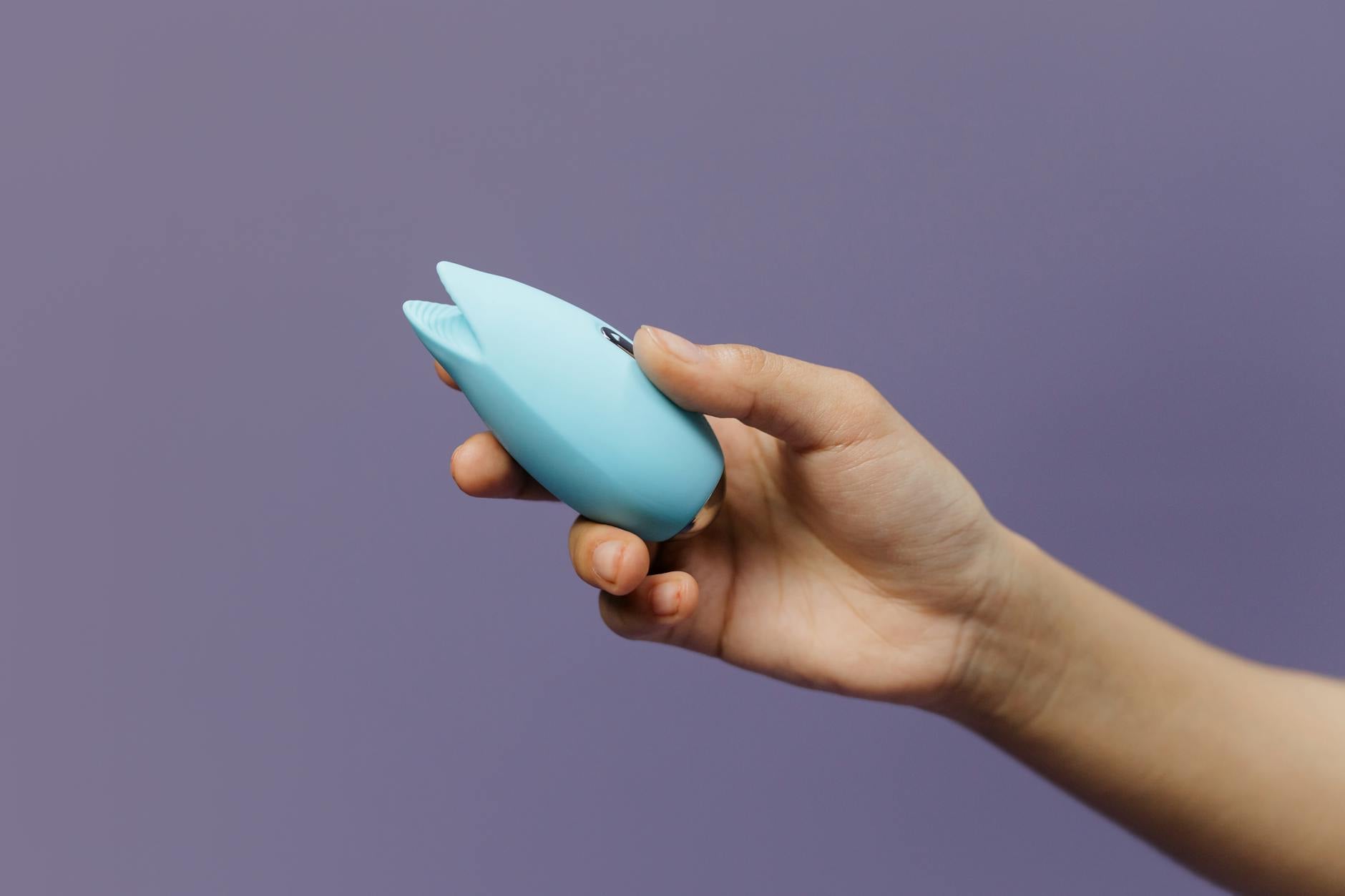
Here's what I hear most often
You want to use a lemon clitoral vibrator. Your partner said if you do, it means you're not satisfied with them. Or worse, it means you're replacing them. So you're stuck.
I'm going to be straight with you: that belief isn't about the toy. It's about fear. And the fear is addressable. But it requires you to do something first that most people skip.
The fear hiding underneath the objection
When someone says "toys are cheating," they're almost never actually worried about a silicone device. They're worried about three things, usually tangled together.
First, inadequacy. Your partner might believe their body or effort should be enough. A vibrator feels like public evidence that they're not. Second, losing you. Sex toys can feel like a gateway to infidelity or a sign you're already gone emotionally. Third, loss of control. If you can satisfy yourself independently, they lose the only currency they thought they had in the relationship. None of these fears are rational, but they're all real.
The mistake most people make is arguing logistics. "It's just a toy," you say. "It doesn't replace you." This doesn't work because you're answering the question they asked, not the fear they're feeling.
What needs to happen before you bring out the toy
You cannot introduce a lemon vibrator while your partner is in a scarcity mindset about your desire. It will confirm every worry they have. So first, you rebuild the foundation.
This takes conversation, but not the conversation you think. Don't start with "I want to use a vibrator." Start with "I want us to be closer, and I think we're missing something." Make it about the relationship, not the toy.
Ask your partner: what would make them feel secure in your desire for them? Not secure about the toy. Secure about you. Listen without defending. Really listen.
Then tell them what you actually need. Maybe it's more frequent touch that isn't necessarily sex. Maybe it's more foreplay. Maybe it's being asked if you came, instead of being assumed. Be specific. Specificity makes the conversation real instead of theoretical.
The reframe that actually works
Once you've listened and been listened to, introduce the vibrator as a solution to something your partner actually cares about, not something they're threatened by.
If your partner worries they don't make you orgasm, say: "I want to experience more pleasure with you. A vibrator gets me there faster, which means I can enjoy us for longer instead of working so hard to finish." That's true, and it's not about them being inadequate. It's about efficiency and mutual enjoyment.
If your partner worries the toy is cheating, be direct: "This is me taking responsibility for my own pleasure. That's not infidelity. It's actually the opposite. I'm not waiting for you to fix me or prove yourself. I'm taking myself seriously."
Then, crucially, ask them to be part of it. Not because they have to like it immediately. But because participation dissolves mystery. Mystery breeds fear.
Bringing a lemon vibrator into the bedroom without the toy becoming the problem
The most important rule: never introduce the vibrator as a substitute. Introduce it as an addition.
Start with your partner present but not participating. You're using a lemon clitoral vibrator during foreplay while they're touching you in other ways. They see it's not replacing their hands. It's supplementing them. Their touch on your body, your vibrator on your clitoris. Both happening.
Keep it low-stakes the first time. Bring it out, acknowledge it's there, use it for maybe three to five minutes, then set it aside. The goal isn't to come. The goal is to normalize it.
Second time, ask if they want to hold it. Not if they want to use it on you. If they want to hold it while you guide it. This shifts power back to them. They're literally in control of the object they were afraid of.
Third time, they might be curious to use it on you. Or they might not. Either way, you've moved past the fear.
When resistance stays strong
Sometimes, even after conversation and patience, your partner digs in. They refuse to let you use a vibrator. They shame you for wanting one. They frame your desire as infidelity.
At that point, you're not dealing with a toy problem anymore. You're dealing with a control problem or a trust problem or a resentment problem. Those require different help.
If you're in a dynamic where your partner controls your body or your pleasure decisions, that's not a toy conversation. That's a relationship conversation, possibly with a couples counselor.
Your pleasure is not cheating. Your autonomy is not betrayal. If your partner can't come to that understanding, the problem isn't the lemon vibrator. It's the relationship itself.
The conversation checklist
Before you even unbox a toy, walk through this with your partner.
Step 1: Pick a time that isn't sexual. Have this conversation over coffee or a walk, not in bed at night when emotions are high.
Step 2: Start with curiosity, not demands. "I've been thinking about trying a vibrator. I'm curious what you think about that," not "I'm going to use a vibrator."
Step 3: Listen for the real fear. When they push back, ask "what are you worried about?" Three times. The real answer is usually deeper than the first response.
Step 4: Share your truth. "When you say that's cheating, I feel like my pleasure isn't allowed. That hurts." Make it about your experience, not their wrongness.
Step 5: Find a compromise that works for both of you. Maybe it's using the toy only during solo time. Maybe it's using it together but never when your partner isn't home. Maybe it's starting with education, watching educational content about vibrators together, before you ever use one.
The point is collaboration, not capitulation.
Why this matters for both of you
I've worked with couples for decades. I can tell you that the ones who successfully navigate this conversation end up closer, not further apart.
Your partner gets to feel heard about their fear. You get to feel respected in your body. And you both get to experience the relief of knowing that desire for yourself isn't a threat to your relationship. It's actually a stabilizer.
When you own your pleasure, you stop blaming your partner for not giving it to you. When your partner sees you enjoying yourself without shame, they get to relax the constant pressure to be everything for you. Both of you breathe easier.
A lemon clitoral vibrator isn't about replacing anything. It's about expanding what's possible when both people feel secure enough to stop fighting.
FAQ
Is using a vibrator actually cheating?
No. Cheating involves deception and breaking agreements with your partner. Using a vibrator alone or with your partner's knowledge is neither. If your partner has asked you not to use one and you do anyway in secret, that's a trust issue, not a toy issue. The solution is honesty, not hiding.
What if my partner will never accept a vibrator?
That's a choice they're making about the boundaries of your relationship. You then get to decide if those boundaries work for you. Some people choose to accept that limit. Others recognize it as a sign of control they're not willing to live with. Either choice is valid. The invalid choice is pretending you're okay when you're not.
Can I use a lemon vibrator if my partner doesn't know?
Technically, yes. Ethically, it depends on the agreements you've made. If you're hiding it because you're afraid of their reaction, that's a sign the relationship dynamic needs work. If you're hiding it out of respect for a boundary they've set, that's different. But hiding usually means you're not actually okay with the boundary, just too afraid to say so.
How do I know if my partner's resistance is about the toy or something deeper?
Pay attention to how they talk about your body and your pleasure in general. Do they shame you for masturbating? Do they monitor your body in other ways? Do they get angry when you want anything for yourself? If yes, the vibrator is just the current issue. The pattern is the real problem.
What if introducing a vibrator actually does help my relationship?
It often does. Once you've had the hard conversation, once you've both felt heard, and once you've included your partner in your pleasure instead of hiding it, most couples report feeling closer. The vibrator becomes a symbol of how you handle differences, not a threat.
Should we use a lemon vibrator together or separately first?
Start with your partner present but not directly involved. That gives them a chance to see it's not scary. Then move toward participation if they want it. Some partners become enthusiastic users. Others stay comfortable with you using it while they're present but not participating. Both are fine. What matters is mutual agreement, not their enthusiasm.