The worry nobody talks about
Here's the thing. When you mention bringing a vibrator into your sex life, your partner doesn't hear "I want more pleasure." They hear "you're not enough." That's not rational. It's also completely predictable. And it's worth understanding before you have the conversation.
Men especially (though this happens across all gender expressions) often experience a sex toy as a threat to their role. The irony is brutal: you're trying to add pleasure to your shared life, and instead they feel subtracted from it. This is fixable. But it requires a different conversation than most people have.
Why the standard pitch fails
Most people try something like this: "A lot of couples use toys. It's normal. It could be fun for us."
This approach fails because it's logical. It appeals to the rational mind. But your partner's worry isn't rational. It's emotional. Logic doesn't touch emotion. So the more you lean on facts ("Studies show...", "It's very common..."), the more defensive they become. They're not doubting the data. They're doubting whether they matter to you.
The conversation that works starts somewhere else entirely.
Step 1: Separate the toy from the deeper conversation
Don't introduce the lemon vibrator as part of a bigger "we need to spice things up" talk. That immediately signals that something is wrong with what you already have. Instead, approach this as a standalone thing.
Wait for a moment when you're not in bed. The couch. A car ride. Somewhere neutral. Then say something like: "I've been thinking about something, and I want to be honest with you about it. There's no pressure here, and I'm genuinely curious what you think."
That opener does two things. It signals that you're not attacking. And it invites them into the conversation as a partner, not as someone you're asking permission from.
Step 2: Lead with what you want, not what the toy does
Now here's the critical part. Don't talk about the vibrator yet.
Instead, talk about what you want your sex life to feel like together. Maybe it's: "I want us to explore more together." Maybe it's: "I want to feel more confident asking for what I like." Maybe it's: "I want us to discover new things that make both of us feel good."
Pick something true. Something that actually matters to you.
Your partner will listen to this differently because it's about your shared future, not about what you're lacking now. You're inviting them into something, not criticizing what exists.
Step 3: Position the toy as a tool for that goal, not a replacement
Only after you've established what you want together should you mention the specific tool.
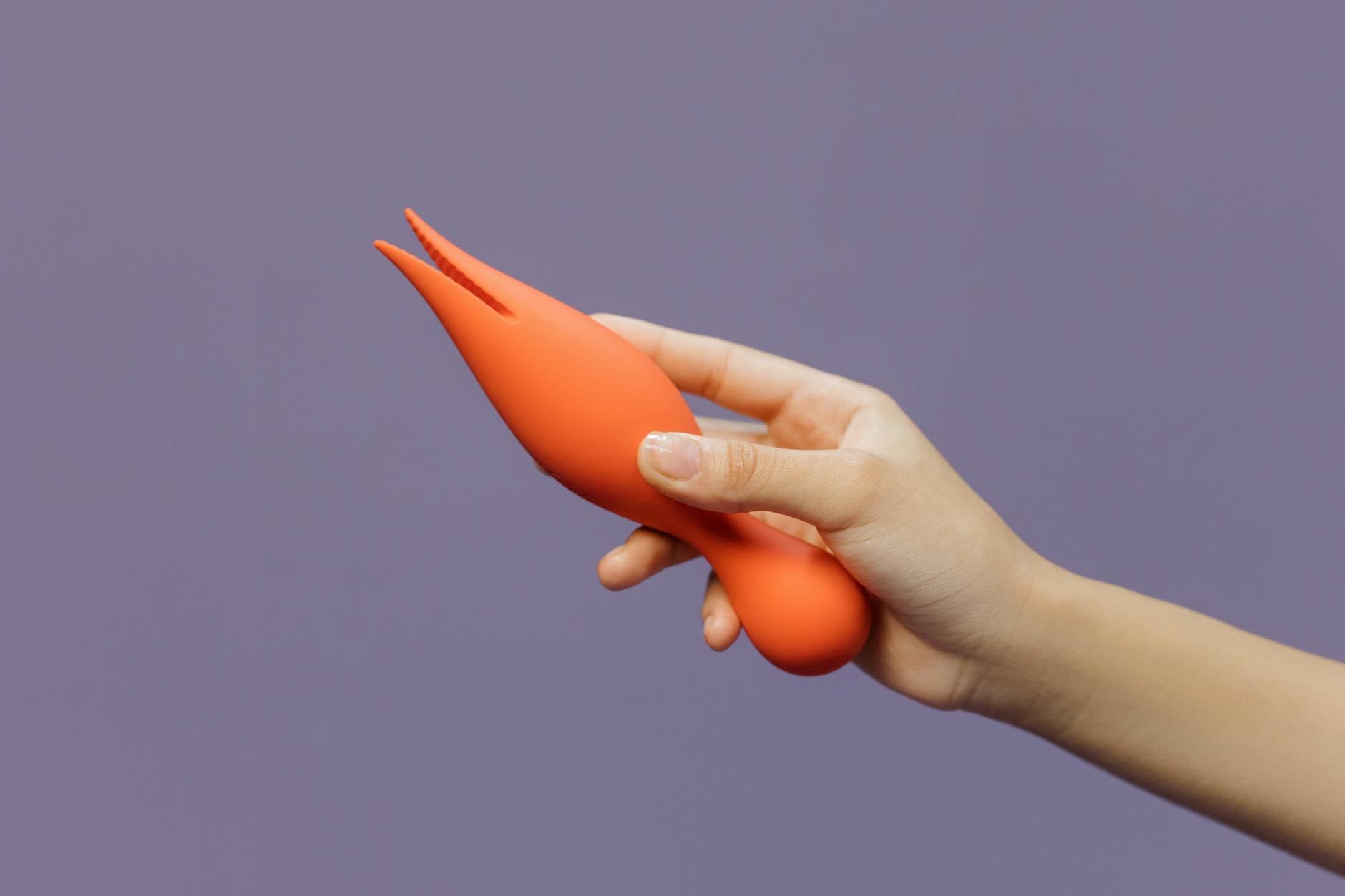
"I've been looking at clitoral vibrators because I think using one together could help us get there. I read about something called a lemon vibrator. It's designed to feel really different from hands. I'm interested in trying it together, with you. Not instead of you. With you."
Notice the language there. "Together." "With you." Not "I want this" or "I'm going to try this." This is a joint exploration.
If they ask what it does, be straightforward. "It uses suction instead of vibration. A lot of people find it feels more intense, and it makes orgasms easier to reach. Basically, I'd be more satisfied, which means better sex for both of us." That's the truth. Don't soften it.
Step 4: Invite them into the decision, not just the act
Many people bring home a toy and then invite their partner to use it. That puts them in a reactive position. Instead, make the decision collaborative.
"I'm interested in trying this. I'd really like you to be part of choosing whether and how we do it. Should we research together? Do you want to look at reviews? Do you want to know what I'm imagining when I use it?"
This shifts their role from "person my partner is springing something on" to "person co-designing our intimate life." The difference is everything.
Some partners will need to sit with the idea for a few days. That's fine. You've opened the door without forcing them through it.
Step 5: Address the real fear directly (if it comes up)
If your partner says something like "Don't you want me to be able to make you come?" or "Are you not satisfied with sex?" then you're finally at the actual conversation.
This is where you get honest. "My body works differently than your body. I love what we do together. That hasn't changed. But my orgasms are easier with certain kinds of stimulation, and a lemon clitoral vibrator gives me that. It's not about you being not enough. It's about me knowing what my body needs."
If this is a long-term partner, you might add: "I want us to prioritize your pleasure too. What would help you feel more satisfied? What have you been wanting to try?"
Make it reciprocal. Immediately.
What happens if they say no
Sometimes a partner will resist, even after you've had the conversation well.
If that's the case, you have a choice. You can drop it. Or you can ask for the real issue. "What specifically worries you about this?" Listen to the answer. It might be: "I feel less important." Or: "I don't understand why you'd need it." Or: "It feels like you're judging me."
Those are all conversations you can have. Resistance to a toy is usually resistance to something deeper. Get to that thing. Solve that thing. The lemon vibrator will still be there.
You deserve pleasure. Your partner deserves to feel secure. When desire feels stuck after long-term relationships, both of those things matter equally. The conversation that honors both is the one that works.
When you're using it together
Here's something people rarely talk about: the first time your partner sees you with a lemon vibrator, it's intense for them. You're experiencing something new. Your response will be visible. Their job in that moment is to stay present, not to disappear.
Before you use it, you might say: "I want to show you what this feels like for me. I want you to watch. I want you to understand how this works for my body. And then I want us to figure out how we use this together."
That frames it as education, not as replacement. They're learning about you. That's intimate.
After, ask them what they noticed. What felt hot to them. What surprised them. Make it a conversation, not a one-person show.
The partners who come around fastest
The ones who understand that a toy is a tool, not a threat. The ones who realize that their pleasure matters more than their ego. The ones who see their partner's orgasm as a win for both of them.
If your partner can get to that place, everything shifts. Suddenly it's not "you want a vibrator" it's "we're trying something that makes us both feel better." That's the frame that sticks.
FAQ
Can introducing a vibrator save a struggling relationship?
No. A lemon vibrator won't fix communication problems, resentment, or disconnection. If your relationship is already struggling, adding a toy usually makes things worse because it introduces another source of conflict. Fix the relationship issues first. The vibrator comes after, as an enhancement to something that's already working.
What if my partner wants to use the toy on me but won't let me enjoy it alone?
That's a control issue, not a toy issue. A healthy partner wants you to have pleasure in all forms, not just pleasure they're directly providing. If your partner is threatened by your solo pleasure, that's worth addressing with a therapist, not by avoiding the vibrator.
How do I know if my partner's resistance is normal or a red flag?
Normal resistance: "I'm not sure about this, but I'm willing to talk about it." They're open, curious, a little nervous. Red flag: "You can never use that," or "That's cheating," or refusal to discuss it. Red flag means you need professional help, because the issue isn't the toy.
Should I hide the fact that I use a lemon vibrator solo if my partner doesn't know?
Not forever. Secrecy erodes intimacy. If you're in a committed partnership and you're regularly using a vibrator alone while hiding it, that's a gap in honesty. Eventually it surfaces, and it becomes a bigger problem. Have the conversation. It might be uncomfortable. It'll be better than the alternative.
What if my partner wants to use the vibrator on me but I want to use it alone?
Both can be true. You can use it with your partner and also solo. These aren't competing things. "I'd love for us to use this together sometimes. And I also want to explore it on my own sometimes. Both matter to me." A partner who can't accept that probably has insecurity that needs addressing.
How long does it usually take for a resistant partner to come around?
It varies wildly. Some partners shift in a single conversation. Others need weeks of processing. Some never fully come around, but they accept it. What matters is whether they're willing to move. If they're closed off completely, you have bigger relationship work to do. If they're hesitant but engaged, give it time. Keep communicating.